How Litchfield County Seniors Are Staying Connected to Their Communities

Key Highlights
- Social isolation is one of the most serious and underrecognized health risks facing older adults, linked to cognitive decline, depression, and higher rates of hospitalization.
- Litchfield County has a growing network of programs, community organizations, and local resources designed specifically to help seniors stay engaged and connected.
- Staying connected doesn't require leaving home every day—the right mix of in-person, telephone, and digital touchpoints can make a measurable difference in well-being.
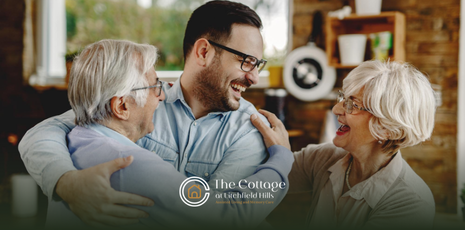
- Family involvement remains one of the strongest protective factors against isolation, and there are practical ways to stay meaningfully present even across distance.
- Senior living communities in the region are playing an increasingly active role in building social connection as a core part of daily life, not an afterthought.
There's a particular kind of quiet that settles in when an older adult starts to pull back from the world. It doesn't always announce itself dramatically. A standing lunch gets skipped. The weekly call to a sibling gets shorter. The church group that used to anchor Tuesday mornings becomes something to get to "when things settle down." And before long, weeks pass with very little meaningful human contact.
For families in Litchfield County, this is one of the most common and most painful things to watch unfold in a parent or grandparent's life. It doesn't look like a crisis. It just looks like getting older. But the research is unambiguous: chronic social isolation in older adults carries health consequences comparable to smoking 15 cigarettes a day. It accelerates cognitive decline, weakens immune function, increases the risk of depression and anxiety, and is independently associated with higher rates of hospitalization and early mortality.
The good news is that Litchfield County, a region often associated with its rolling hills and quiet charm, has more going on for its senior residents than most people realize. And understanding what's available, what works, and what genuinely keeps older adults connected is the first step toward making sure the seniors you love don't slip quietly through the cracks.
Why Connection Matters More Than Most Families Realize
Most of us understand loneliness as an emotional experience. What's less widely appreciated is that it's also a physiological one. When older adults experience chronic social isolation, the body responds as if under threat, elevating cortisol, disrupting sleep, impairing immune response, and accelerating inflammation. Over time, these effects compound in ways that show up in measurable health outcomes.
A landmark study by researchers at Brigham Young University found that social isolation increases mortality risk by 29 percent, and that the effect is stronger in younger-old adults (those in their 50s and 60s) than in those who are older, suggesting that the pattern of connection established in earlier retirement years sets the trajectory for what follows.
For seniors in Litchfield County, the regional geography adds a layer of complexity. This is a rural and semi-rural area. Distances between towns can be significant. Public transportation is limited. Driving independence, when it ends, can mark a sharp inflection point in a senior's social world. What was once manageable suddenly requires help, planning, and a willingness to ask for both.
This is why intentional connection. The kind that doesn't just happen organically but is built into a person's weekly structure matters so much.
What's Available for Seniors in Litchfield County
The region has a genuine infrastructure of support for older adults who want to stay active, engaged, and socially connected. It doesn't get the visibility it deserves, and many families discover it only after a parent is already isolated. Here's what's worth knowing:
Area Agency on Aging — Northwestern CT
The Northwestern Connecticut Area Agency on Aging (NWCAAA) serves Litchfield County and coordinates a wide range of programs for older adults, including nutrition services, caregiver support, transportation assistance, and referrals to community programming. Their staff can be a useful first call for families trying to understand what exists locally and what a loved one might qualify for. They have specific knowledge of the towns across Litchfield County, including Torrington, Litchfield, Winsted, and surrounding communities, and understand the rural access challenges many seniors face.
Senior Centers Across the Region
Senior centers in Litchfield County serve as genuine community hubs, not the dated stereotype of a bingo hall, but active spaces where older adults take exercise classes, learn new skills, connect over shared meals, and access services. Torrington's senior center, for example, offers programming that spans fitness, arts, technology education, and social events. For seniors in the Torrington area who are mobile and willing to engage, the senior center can be the cornerstone of a rich weekly social life.
The Role of Charlotte Hungerford Hospital
Charlotte Hungerford Hospital in Torrington is more than a regional medical center—it functions as a connective tissue in the community's health and wellness ecosystem for older adults. Through its community health programming and partnerships with local organizations, Charlotte Hungerford has been involved in initiatives aimed at reducing preventable hospitalizations among seniors, including addressing the social determinants of health, isolation among them. For seniors managing chronic conditions, the hospital's care teams increasingly recognize that social connection is a clinical variable, not a soft one.
Families navigating a loved one's health challenges in Litchfield County should know that the providers at Charlotte Hungerford are generally well-connected to local senior services and can often provide referrals that open doors to community programming.
Faith Communities and Civic Organizations
For many older adults in Litchfield County, their faith community is their primary social world and for good reason. Churches, synagogues, and other faith congregations offer regular gathering, a sense of shared identity, and informal networks of mutual support that are often invisible to outside observers but deeply meaningful to those within them. Civic organizations, veterans' groups, garden clubs, and historical societies serve a similar function.
When an older adult steps back from these communities, it's worth exploring why. Sometimes it's logistics (transportation, mobility). Sometimes it's a quiet shame about needing help or not wanting to be seen as diminished. Understanding the underlying reason is usually the key to helping restore the connection.
What Research and Practice Tell Us About Effective Connection
Not all social contact is equally protective. Research distinguishes between what might be called "breadth" (having many acquaintances) and "depth" (having relationships characterized by trust, emotional reciprocity, and genuine knowing). For older adults, depth matters far more than breadth. A senior who sees 20 people a week at a crowded day program but has no one who really knows them can still experience deep loneliness.
The types of connection that consistently show the strongest association with wellbeing in older adults share a few qualities:
| Connection Type | Why It Matters | Practical Example |
|---|---|---|
| Regular, structured social contact | Predictability reduces anxiety and creates anticipation | Weekly lunch with the same group; standing phone calls |
| Intergenerational interaction | Exposure to younger people provides stimulation, purpose, and vitality | Volunteering at a school; grandchild visits; mentoring programs |
| Contribution and purpose | Feeling useful is distinct from feeling liked — both matter | Volunteering, teaching a skill, participating in a community project |
| Shared activity | Doing something together, not just being together | Book clubs, exercise classes, gardening groups |
| Technology-assisted contact | Expands reach, especially in rural areas | Video calls, online community groups, virtual programming |
We've seen, time and again, that the seniors who thrive socially in later life aren't necessarily the most extroverted people. They're the ones who have at least one or two relationships where they feel genuinely seen, and a weekly structure that gives them something to look forward to. That combination is more protective than any single factor alone.
The Technology Piece: More Accessible Than Most Families Think
A significant and growing number of seniors in Connecticut are using smartphones, tablets, and computers to stay connected, and the learning curve, while real, is rarely as steep as families fear. Programs through local libraries, senior centers, and organizations like AARP offer technology education specifically designed for older adults, with patient, jargon-free instruction.
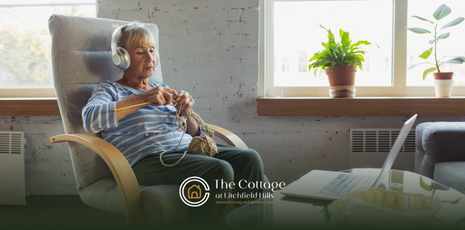
Video calling, in particular, has transformed what's possible for seniors in rural areas like much of Litchfield County. The ability to see a grandchild's face, attend a virtual book club, or sit in on a faith community's online service without leaving home is not a consolation prize for connection—for seniors with mobility limitations, chronic health conditions, or transportation barriers, it's a genuine lifeline.
Families can help by:
- Setting up devices with large fonts, simplified home screens, and saved contacts
- Scheduling regular video calls at consistent times so there's always something to look forward to
- Connecting seniors with local technology training programs rather than assuming they won't learn
- Starting with one platform and one use case — complexity is the enemy of adoption
What Families Can Do: Practical, Not Preachy
Family involvement is consistently one of the strongest buffers against senior isolation — but the quality of that involvement matters more than the frequency. A rushed 10-minute visit while running errands is qualitatively different from an hour spent sitting with someone, asking about their life, and genuinely listening.
Some of the most effective things families do:
- Create structure, not just presence. Standing weekly calls or visits give seniors something predictable to anchor to. Spontaneous contact is wonderful; structured contact is more reliably protective.
- Help rebuild, don't just maintain. If a parent has already pulled back from a community they used to belong to, the re-entry barrier can feel high. Offering to go with them the first time back — to the senior center, the church social, the garden club — makes it easier.
- Ask the right questions. "How are you?" often gets a reflexive "Fine." More specific questions — "Who did you talk to this week?" "What's the best part of your week been?" — open more honest conversations about whether someone is truly engaged or quietly withdrawing.
- Take transportation seriously. In Litchfield County, losing the ability to drive is often the beginning of isolation. Proactively solving the transportation problem — whether through ride services, volunteer driver programs, or helping establish new routines — can prevent a significant social contraction.
- Don't underestimate loneliness because it isn't medical. Families sometimes focus intensely on a parent's physical health while missing that the more urgent problem is their diminishing social world. Both deserve attention.
When a Senior's Home Environment Is Part of the Problem
There's a category of isolation that's harder to solve with programming and phone calls, and that's the isolation that comes from living in a space that's no longer working for someone. When a home becomes difficult to navigate, when winters mean being effectively housebound, when neighbors have moved or passed away, and the street feels unfamiliar, the home itself can become the source of disconnection.
In those situations, a move to a senior living community isn't a retreat from life. It's often the thing that restores it. Seniors who transition to well-designed communities frequently describe the experience, after the initial adjustment, as reconnecting with a world they'd been quietly losing access to. Meals shared with others. Familiar faces every day. Programming that gives the week a shape. Staff who notice when something seems off.
The social architecture of a good senior living community is not accidental. It's designed, thoughtfully, deliberately, to keep people engaged with life and with each other.
Connection Is the Foundation and the Right Community Makes It Possible
Social connection isn't a nice-to-have in later life. It is a health essential—one that shapes cognitive function, physical resilience, emotional well-being, and quality of life in ways that are well-documented and deeply felt. For seniors in Litchfield County, staying connected is both more possible and more challenging than in many other parts of Connecticut: there are meaningful resources here, but the rural character of the region means that connection doesn't always happen organically the way it might in a denser, more urban environment.
That's where the right community makes all the difference.
The Cottage at Litchfield Hills is designed, at every level, to ensure that the seniors in our care never have to work hard to find connection. It's woven into the fabric of daily life: shared meals, thoughtfully planned programming, staff who know residents by name and notice when something feels off, and a physical environment that invites people to be together rather than retreating to their rooms. We serve families across Connecticut who are looking for more than safe housing—they're looking for a place where a parent or grandparent can genuinely flourish.
If you're beginning to wonder whether a loved one's world has gotten a little too small, we'd welcome the conversation. Reach out to us today and come see us for a tour. Sometimes the best way to understand what's possible is simply to walk through the door.
Frequently Asked Questions
How do I know if my parent is socially isolated, versus just introverted and content with a quieter life?
This is one of the most important distinctions to get right. Introverted people can thrive with less social contact—what matters is whether they feel satisfied with their level of connection, not whether it meets an external standard. Warning signs of problematic isolation include: withdrawal from activities that previously brought them enjoyment, increased expressions of sadness or purposelessness, declining self-care, significant changes in sleep or appetite, or statements like "nobody cares" or "I don't matter anymore." If those signals are present, it's worth a deeper conversation.
What transportation options exist for seniors in Litchfield County who no longer drive?
The Northwestern CT Area Agency on Aging coordinates transportation assistance for eligible seniors in the region. Some individual towns in Litchfield County have volunteer driver programs. Dial-a-Ride and similar services operate in parts of the area. The senior center in Torrington can be a useful resource for understanding what's available locally, as transportation options vary significantly by town.
Is social isolation a reason to consider a move to assisted living?
It can be, and it's more commonly a factor than families expect. If someone is spending the majority of their time alone, has few meaningful in-person connections, and lacks the mobility or transportation to change that on their own, a move to a community designed around social engagement may meaningfully improve their quality of life. It doesn't need to be framed as a medical necessity to be the right decision.
How can I help a parent who refuses to engage with senior programming or social opportunities?
Resistance is common and usually rooted in something specific: fear of being seen as "old," grief over former independence, anxiety about new environments, or past negative experiences with group settings. Rather than pressing, try starting small: one familiar activity, with you present the first time. Connection to a specific person (a neighbor, a former colleague, a faith community member) often works better than connection to a program. Meeting people where they are, rather than where you want them to be, is usually the more effective path.
Does Charlotte Hungerford Hospital have resources for senior social health concerns?
Charlotte Hungerford Hospital's community health team and primary care providers are increasingly attentive to the social dimensions of senior health. While the hospital itself isn't a social programming center, its care teams can provide referrals to community resources and, in some cases, flag social isolation as a clinical concern worth addressing in a patient's care plan. Asking a primary care provider directly, "Are there community resources you'd recommend for someone who's been more isolated lately?", is often an effective first step.
Sources:
- https://news.byu.edu/news/prescription-living-longer-spend-less-time-alone
- https://nwcares.org/western-connecticut-area-agency-on-aging-wcaaa/
- https://wcaaa.org/resources/community-services/senior-centers-and-focal-points
- https://www.ncoa.org/article/the-top-10-most-common-chronic-conditions-in-older-adults/
- https://pmc.ncbi.nlm.nih.gov/articles/PMC8074273/

Other articles you might like